Birth date
1772
Death date
1834
Birth town
Devon
Country
England
Poems by this Poet
Displaying 371 - 380 of 495
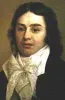
Coleridge was the son of a vicar. He was educated at Christ's Hospital, London, where he became friendly with Lamb and Leigh Hunt and went on to Jesus College Cambridge, where he failed to get a degree. In the summer of 1794 Coleridge became friends with the future Poet Laureate Southey, with whom he wrote a verse drama. Together they formed a plan to establish a Pantisocracy, a Utopian community, in New England. They married sisters, but the scheme fell apart and they argued over money and politics.
Coleridge at this time was an ardent non-conformist and in 1796 preached throughout the West Country, deciding, however, not to become a minister. In 1797 he met William Wordsworth and for the next year and a half lived and worked closely with him, collaborating to produce the Lyrical Ballads. In 1798, disillusioned with English politics, Coleridge set out for Germany, where he studied Kant, Schiller and Scheling. On his return he moved to the Lake District to be with the Wordsworths, but suffered from his failing marriage and an increasing dependence on opium. He also fell hopelessly in love with Wordsworth's future sister-in-law, Sara Hutchinson, the inspiration for his love poems of this period, and separated from his wife in 1807. Coleridge failed to restore his health or mental balance and quarrelled irrevocably with Wordsworth in 1810, alienating also Dorothy and Sara, with whom he had been editing a periodical The Friend. Winter 1813-14 brought a rebirth of his religious beliefs and for the first time he openly admitted his opium addiction and sought medical help. In 1816 he lodged in the London household of a young surgeon Dr James Gilman, where he was to remain for the rest of his life. The publication of Christabel in this year assured his reputation as a poet but the end of his life was taken up with religious and philosophical prose works.
Coleridge at this time was an ardent non-conformist and in 1796 preached throughout the West Country, deciding, however, not to become a minister. In 1797 he met William Wordsworth and for the next year and a half lived and worked closely with him, collaborating to produce the Lyrical Ballads. In 1798, disillusioned with English politics, Coleridge set out for Germany, where he studied Kant, Schiller and Scheling. On his return he moved to the Lake District to be with the Wordsworths, but suffered from his failing marriage and an increasing dependence on opium. He also fell hopelessly in love with Wordsworth's future sister-in-law, Sara Hutchinson, the inspiration for his love poems of this period, and separated from his wife in 1807. Coleridge failed to restore his health or mental balance and quarrelled irrevocably with Wordsworth in 1810, alienating also Dorothy and Sara, with whom he had been editing a periodical The Friend. Winter 1813-14 brought a rebirth of his religious beliefs and for the first time he openly admitted his opium addiction and sought medical help. In 1816 he lodged in the London household of a young surgeon Dr James Gilman, where he was to remain for the rest of his life. The publication of Christabel in this year assured his reputation as a poet but the end of his life was taken up with religious and philosophical prose works.